Childhood scoliosis and posture are important topics for parents. Early awareness can help you spot problems before they get worse. Scoliosis is a curve in the spine that often appears in children. Good posture can help prevent some spine issues. However, early detection is key to better outcomes. In this blog, you will learn about the signs, causes, diagnosis, and ways to prevent scoliosis in kids.
What Is Childhood Scoliosis?
Scoliosis in children means the spine curves sideways. This curve can look like an “S” or “C” shape. Sometimes, the curve is mild and hard to see. Other times, it is more obvious. Good posture means standing and sitting straight. Poor posture can make scoliosis worse or hide early signs. But, not all posture problems are scoliosis. Still, watching your child’s posture can help spot issues early.
Early Signs and Symptoms
Spotting scoliosis early can make a big difference. Look for these signs of scoliosis in children:
Because early signs can be subtle, regular checks are important. If you notice any of these, talk to your child’s doctor.
Causes and Risk Factors
Most cases of childhood scoliosis have no known cause. This is called idiopathic scoliosis. However, some risk factors include:
Although posture alone does not cause scoliosis, poor posture can hide early signs. Therefore, regular posture checks are helpful.
Diagnosis and Screening
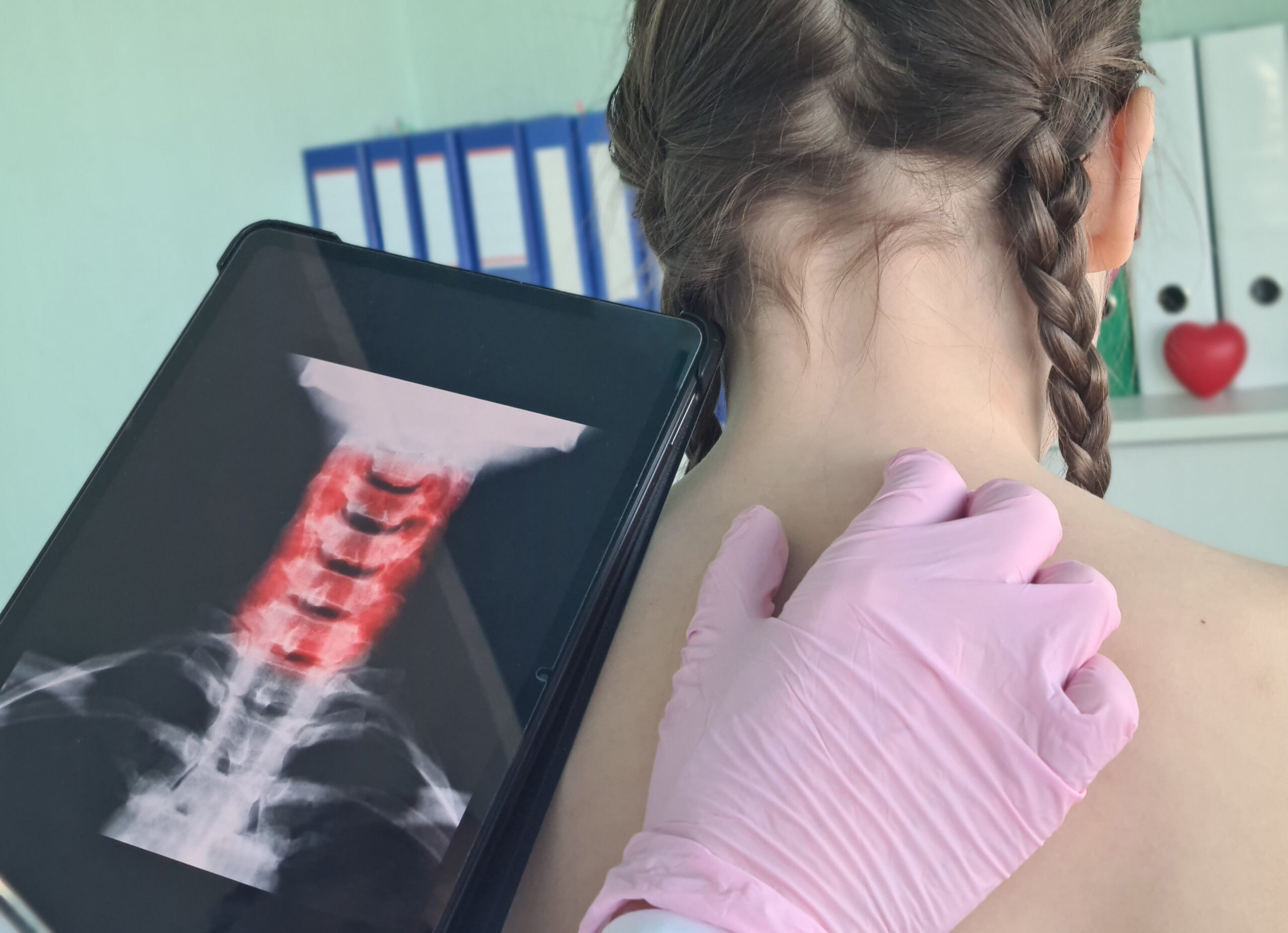
Doctors diagnose scoliosis by looking at your child’s back and posture. They may ask your child to bend forward. This helps spot unevenness in the back. Sometimes, doctors use a tool called a scoliometer to measure the curve. If they see a curve, they may order an X-ray. X-rays show how much the spine is curved. Early screening is often done at school or during check-ups. If you notice any signs, consult your pediatrician right away.
Treatment Options
Treatment for childhood scoliosis depends on the curve’s size and your child’s age. Common options include:
Good posture and regular exercise can help keep the back strong. Physical therapy may also help improve posture and comfort.
Prevention and Healthy Posture Tips
While not all scoliosis can be prevented, healthy habits support a strong spine. Here are some tips for parents:
Because healthy posture can help spot problems early, make posture checks a routine at home.
When to Seek Medical Advice
If you notice uneven shoulders, hips, or ribs, see a doctor. Also, if your child complains of back pain or you see a curve in their spine, consult a pediatric specialist. Early help can prevent problems from getting worse.
Conclusion & Call-to-Action
In summary, childhood scoliosis and posture are important for your child’s health. Early signs can be easy to miss, but regular checks help. Good posture and healthy habits support a strong back. If you notice signs of scoliosis or posture issues in your child, consult pediatric specialist at Cuddle Children Clinic for personalized guidance.