
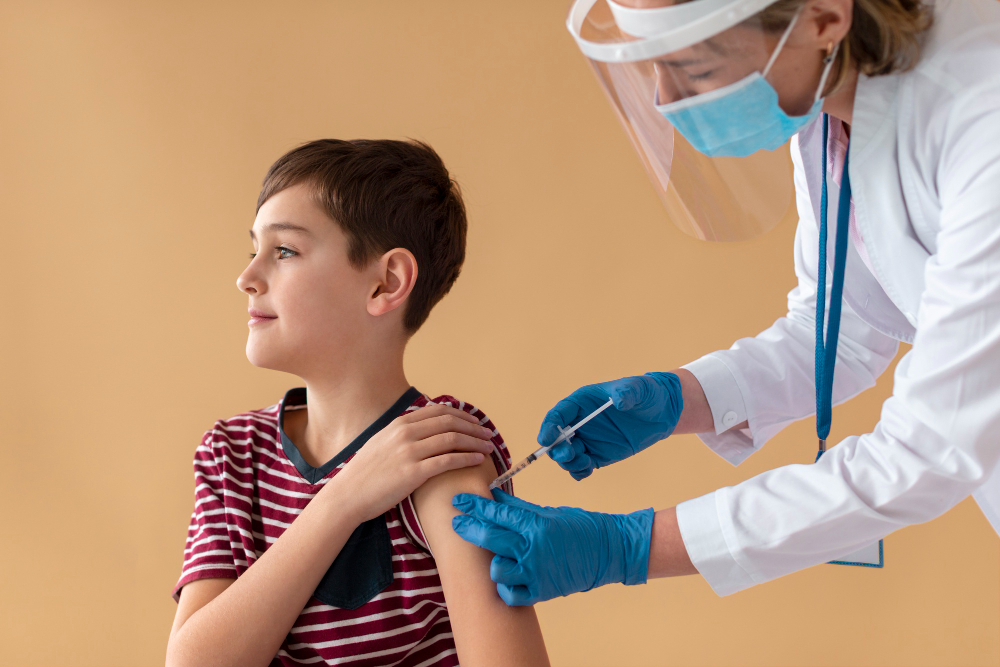
Vaccines in children are one of the best ways to protect your child’s health. They help prevent serious diseases and keep families safe. In fact, vaccines in children save millions of lives every year. Let’s explore five important facts every parent should know about childhood vaccines.
Fact 1: Vaccines in Children Prevent Serious Diseases
First, vaccines in children protect against many dangerous illnesses. For example, vaccines help prevent measles, mumps, polio, and whooping cough. According to the World Health Organization (WHO), vaccines prevent 3.5 to 5 million deaths each year worldwide. Without vaccines, children are at higher risk for life-threatening diseases. So, making sure your child gets all recommended vaccines is very important.
Therefore, keeping up with your child’s vaccine schedule helps protect everyone.
Fact 2: Childhood Vaccines Are Safe and Well-Tested
Next, all vaccines in children go through strict safety checks before use. The Centers for Disease Control and Prevention (CDC) and the Food and Drug Administration (FDA) review every vaccine. In addition, scientists test vaccines for years before they reach your doctor’s office. Side effects are usually mild, like a sore arm or low fever. Serious side effects are very rare. If you have concerns, talk to your child’s doctor for guidance.
Because of these steps, vaccines are safe for most children.
Fact 3: Vaccines in Children Help Build Community Immunity
Also, vaccines in children do more than protect one child. When many children get vaccinated, it creates “community immunity” or “herd immunity.” This means diseases have less chance to spread. According to the CDC, high vaccination rates can stop outbreaks before they start. This protects babies, older adults, and people with weak immune systems. So, by vaccinating your child, you help keep your whole community healthy.
Therefore, every vaccine matters for your family and your neighbors.
Fact 4: Childhood Vaccines Follow a Careful Schedule
Another key fact is that vaccines in children are given on a set schedule. Health experts, like the CDC and WHO, create these schedules to give the best protection at the right time. For example, some vaccines are given at birth, while others are given at school age. Sticking to the schedule helps your child build strong immunity early. If your child misses a vaccine, your doctor can help you catch up.
Because timing matters, keep track of your child’s vaccine appointments.
Fact 5: Vaccines in Children Are Needed Even If Diseases Seem Rare
Finally, some parents wonder if vaccines are needed since many diseases seem rare today. However, these diseases can return if vaccination rates drop. For instance, measles cases have increased in some countries where fewer children get vaccinated. The WHO warns that stopping vaccines can lead to outbreaks. So, even if you don’t see these diseases often, vaccines are still important for your child’s safety.
Therefore, keeping up with vaccines protects your child now and in the future.
In summary, vaccines in children are safe, effective, and vital for good health. They protect your child, your family, and your community. For the best advice, consult your pediatrician at Cuddle Children Clinic about your child’s vaccine needs.